
By Dave Byrne
Why Is My Wooden Floor Turning Grey? (And What to Do About It)
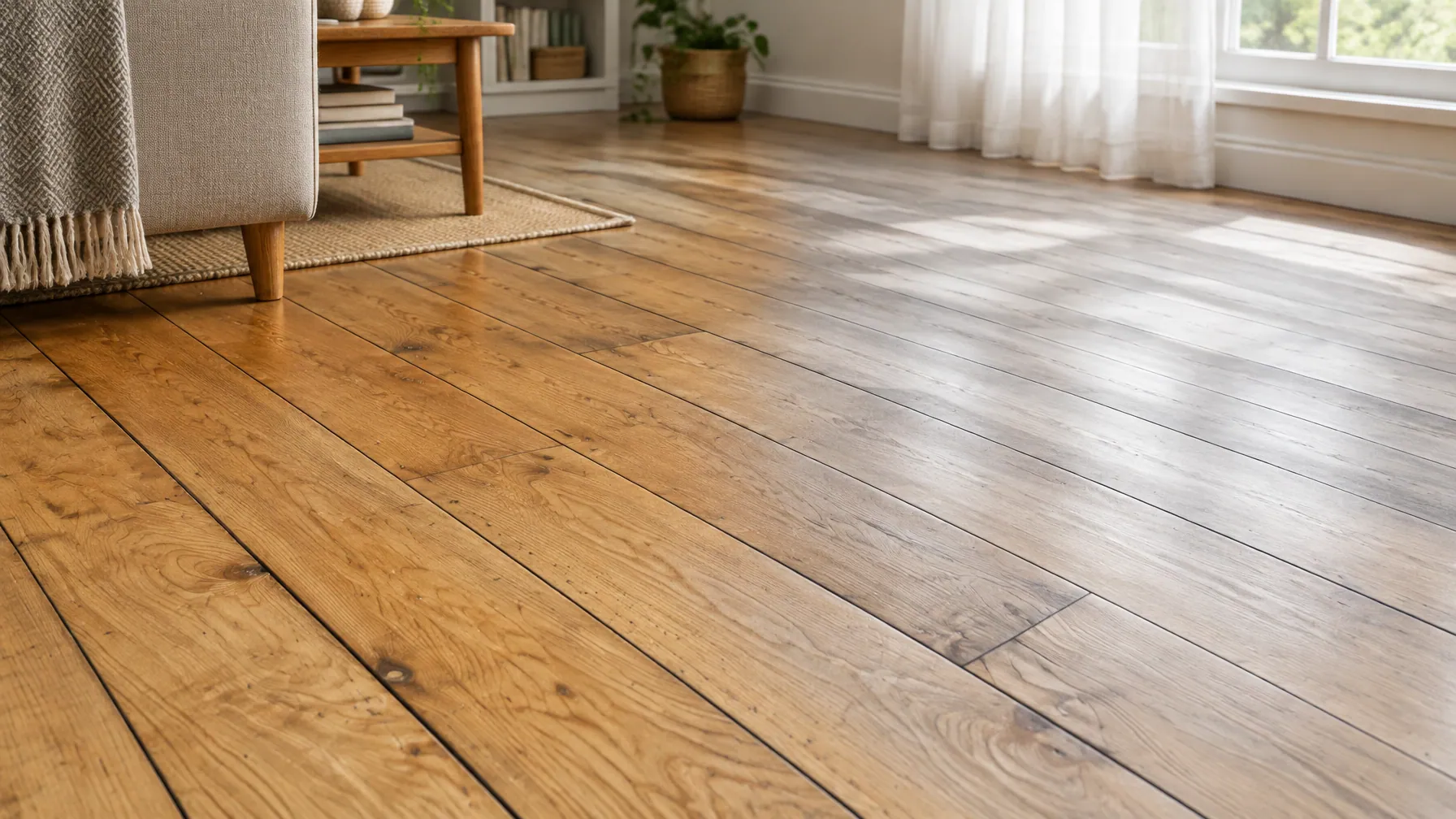
If you’re asking, “why is my wooden floor turning grey?”, the colour change may be down to sunlight, a tired finish, moisture or cleaning products. Sometimes grey floorboards just need the right clean. In other cases, the protective coating has worn away, or the timber itself has changed colour.
The pattern can offer useful clues, but it is not a diagnosis on its own. Check for any nearby leak or dampness first, and avoid scrubbing harder or applying a stronger cleaner until you know what you’re dealing with.
Table of Contents
What can make wooden floorboards look grey?
Sunlight and UV exposure
Daylight gradually changes the colour of timber and its finish. Sun-exposed areas can become paler or greyer, while the floor beneath a rug or furniture may stay a different shade. This often leaves a visible outline or a faded strip near a window.
Blinds and curtains can reduce direct sunlight, although they cannot stop natural colour changes completely. Moving rugs and furniture occasionally can also help limit stark differences between covered and exposed areas.
Worn lacquer or finish
A lacquered floor relies on its protective coating to take everyday wear. In busy routes, that finish can become dull and scratched; if it wears through, bare timber may be exposed to dirt and spills. The affected area can then look grey, especially beside sections where the finish is still intact.
A dull surface is not automatically bare wood. It may be a layer of residue, fine surface scratches or a finish that needs maintenance. The distinction matters because a recoat is only suitable when the existing coating is still sound. Our guide to recoating vs refinishing explains the difference.
Water or moisture
Water can affect the finish and, if it reaches the timber, cause discolouration. Check for a possible source around plant pots, pet bowls, external doors, plumbing or appliances. Grey or dark marks may also appear alongside other changes, such as a cloudy finish or boards that feel raised. If the marks are very dark rather than grey, see why a wooden floor turns black.
Deal with the source before considering cosmetic work. If you suspect an active leak or ongoing damp, get it investigated and resolved first; sanding or refinishing over a continuing moisture problem will not address its cause.
Cleaning products or too much water
Products not intended for your floor’s finish can leave a film or dull the surface. A mop that is too wet can also push moisture into joints and damaged areas. Avoid steam mops, bleach, vinegar and abrasive pads on wooden floors.
For lacquered floors, use a suitable pH-neutral cleaner designed for your type of finish and use as little moisture as practical. Our wood floor after-care guide lists the products we recommend. If you have already used a cleaner that left the boards sticky or hazy, stop and seek advice rather than layering on another product.
Weathered timber brought indoors
Some timber that has been exposed to the elements develops a grey, weathered surface. If boards like these are brought indoors, the grey may be part of the timber’s changed appearance rather than ordinary household dirt. How much can be improved depends on the boards’ condition and thickness, so assessment is sensible before sanding.
How to tell surface dirt from finish wear
Try a small, cautious check in an inconspicuous area. First compare the grey patch with a cleaner-looking part of the floor in natural daylight. Look at the surface from a low angle: a dull, scratched traffic lane may suggest wear, while a distinct patch or outline near a window or rug may point to uneven exposure.
If there is no sign of moisture damage, use a soft cloth and a small amount of cleaner approved for that floor’s finish on the test area. Let it dry fully before judging the result.
- If the grey lifts, surface dirt or residue may be contributing.
- If it stays dull or discoloured, the finish or timber may be affected.
- If the boards look raised, feel damp or show a mark near a leak, stop testing and investigate moisture.
Do not scrub repeatedly or use stronger chemicals to force a result. A small patch test can guide the next step, but it cannot establish how deeply a stain has penetrated.
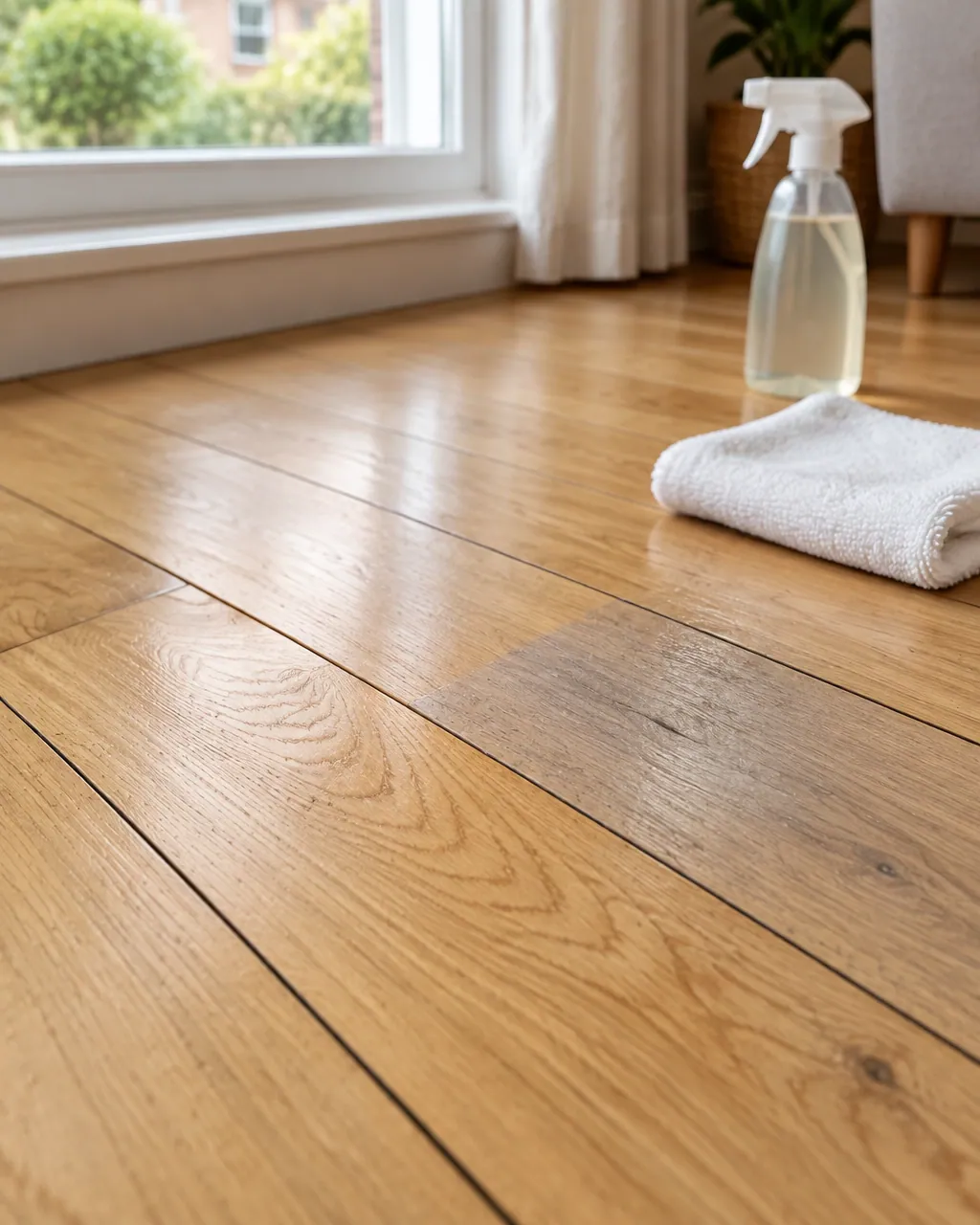
How to prevent grey patches
A few steady habits help protect the finish and make future colour changes less pronounced:
- Use blinds or curtains to reduce direct sunlight.
- Place entrance mats inside and outside external doors to catch grit and moisture.
- Wipe spills promptly and use waterproof trays beneath plants.
- Dry sweep or vacuum with a hard-floor setting to remove grit.
- Use a cleaner matched to the finish, and avoid soaking the floor.
- Move rugs and furniture occasionally to reduce uneven sunlight exposure.
For more day-to-day guidance, see our wood floor after-care guide or our guide to how to clean wooden floors.
When is cleaning not enough?
If the grey lifts during a suitable test, careful routine cleaning may be all that is needed. If the floor remains dull but its protective lacquer is intact, a professional wood floor recoat may be worth considering. Recoating refreshes a suitable existing finish without sanding back to bare timber; it will not remove deep staining or repair finish that has worn through.
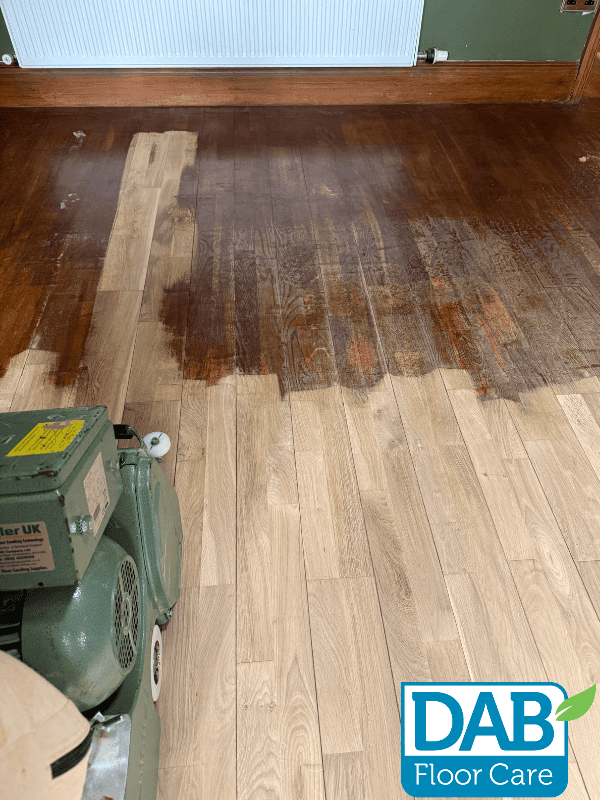
A localised repair may be appropriate for a limited area, although a repaired patch can look different from the surrounding floor. Where the finish has failed more widely, the timber is stained, or the colour difference is extensive, full sanding and refinishing may be the more suitable restoration option.
We start with the least invasive approach that fits the floor’s condition. For a full assessment, see our wood floor sanding and restoration service. We use Lagler PST® (Premium Sanding Technology) to capture sanding dust as we work; no sanding process should be described as completely dust-free.
For new finishes after sanding, options include lacquer or 2K oil. Hardwax oil is only appropriate when refreshing or recoating a floor that already has a compatible hardwax finish. Our oil vs lacquer guide explains the differences.
Wood floor restoration across West Yorkshire, Greater Manchester and East Lancashire
DAB Floor Care is based in Todmorden. Dave Byrne visits every job personally, and we offer free site surveys so the floor can be assessed before we recommend cleaning, recoating, a repair or sanding and restoration.
Looking for local help? See our pages for wood floor sanding in Halifax and Huddersfield. Out-of-hours and school-holiday scheduling is available where appropriate to help reduce disruption.
Frequently asked questions
Can cleaning restore grey floorboards?
Sometimes. If the grey is surface dirt or residue, a suitable cleaner may improve the appearance. If the finish has worn through, sunlight has changed the timber, or moisture has stained the boards, cleaning alone is unlikely to resolve it.
Can a grey wooden floor be recoated?
Possibly. Recoating may suit a floor with light wear when the existing finish remains intact. If bare timber is visible or the grey is within the wood, sanding, localised repair or another restoration approach may be needed.
Will sanding remove grey from a wooden floor?
Often, yes, when the grey is in the surface of the timber or the worn finish. It depends on how deep the discolouration goes, and a moisture-related stain may not fully sand out. A site survey will show what is realistic before any work is agreed.
Ask us to assess your floor
If you are unsure whether the grey is on the surface, in the finish or in the timber, Dave can take a look and explain the options. Message Dave on WhatsApp, call 07799 620089, or use the booking button to request a visit.

 Chat with us