
Engineered Wood Floor Sanding & Restoration
Many homeowners assume an engineered wood floor can’t be restored once it’s scratched, dull or worn. In most cases, it can — provided the wear layer is thick enough. We assess every engineered floor before recommending sanding, so you know exactly what’s achievable before any work begins.
We restore engineered oak flooring throughout West Yorkshire, Greater Manchester and East Lancashire — helping homeowners avoid the cost of replacement wherever possible.
Can Engineered Wood Floors Be Sanded?
In many cases, yes. Unlike solid timber, an engineered floor has a layer of real hardwood — the wear layer — bonded to a stable plywood or softwood core. Sanding only ever touches this top layer, so its thickness is what determines whether restoration is possible.
As a general guide:
- 2mm wear layer — usually suitable for one light professional sand
- 3mm wear layer — gives a greater safety margin
- 4mm+ wear layer — can often be sanded more than once over its lifetime
If the wear layer measures less than roughly 2mm, sanding isn’t generally recommended — there’s a real risk of exposing the core underneath. That’s not the end of the road, though: an existing finish can often be professionally recoated instead, restoring protection and appearance without removing any timber. See our recoating and re-oiling page for more on that option.
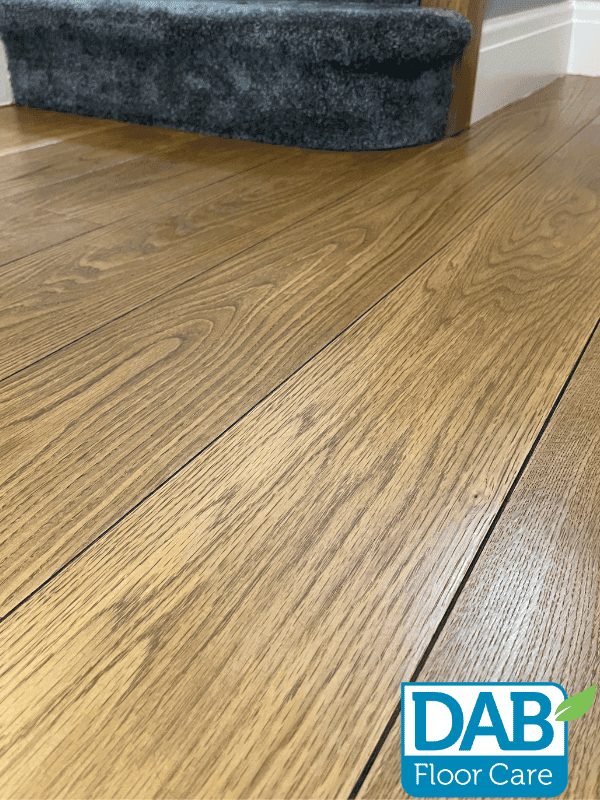
Engineered vs Solid Wood Floor Sanding
The process looks similar, but engineered flooring needs a more cautious approach. Solid timber floors can often be sanded several times because they’re made from a single piece of hardwood throughout.
Engineered flooring relies on a comparatively thin wear layer that has to be preserved — which is why every floor gets assessed individually before any work begins, with the goal of restoring it safely while removing as little timber as possible.
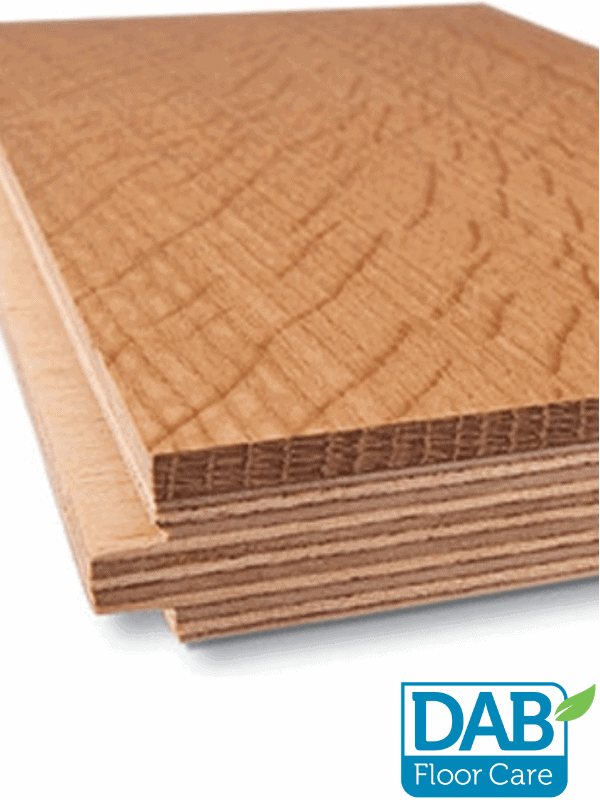
How to Check Your Wear Layer
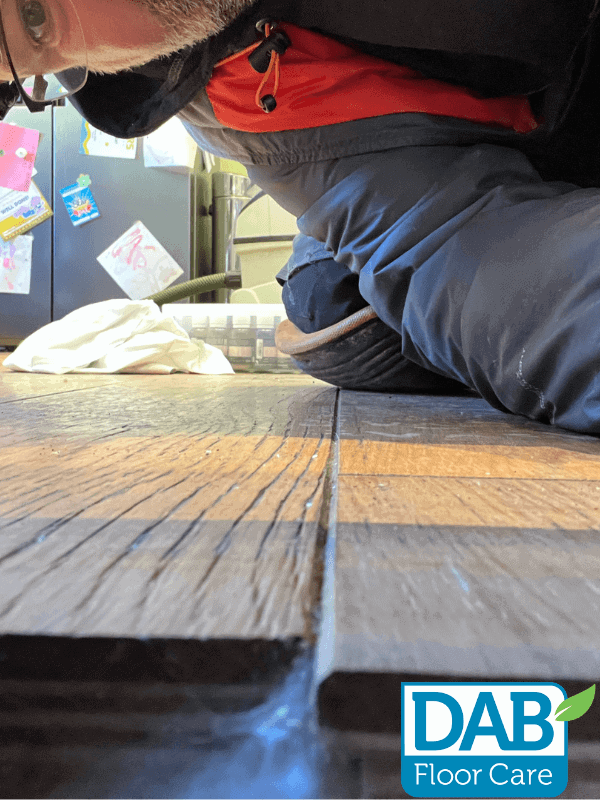
You don’t need to guess. The edge of an engineered board is often visible beneath a radiator pipe cover, at a doorway threshold, or beside a removable floor vent.
You’ll usually see a darker hardwood layer sitting above a paler plywood or softwood core — that upper section is the wear layer. If you’re not sure what you’re looking at, we’re happy to check this for you as part of a free, no-obligation survey.
Wear layer thickness is the single thing that decides whether an engineered floor can be sanded at all, and how often. A 4mm or thicker layer will usually take two or three passes over its lifetime; under 2mm is rarely worth attempting. We go into this properly in how many times can an engineered floor be sanded.
Common Problems We Restore
Professional engineered floor sanding can remove or significantly reduce surface scratches, worn lacquer, scuff marks, pet claw marks, furniture scratches, UV fading, general dullness, minor staining, and everyday wear.
Many engineered oak floors installed 10-20 years ago were manufactured with generous wear layers, which makes professional restoration a genuinely economical alternative to replacement.
Our Engineered Wood Floor Sanding Process
- Assessment — checking wear layer thickness, overall condition, and discussing the finish you’re hoping to achieve
- Controlled sanding — carefully managed passes designed to preserve as much of the wear layer as possible while removing surface damage, rather than aggressive material removal
- Repairs — damaged boards, small gaps, or localised defects addressed before finishing
- Optional colour change — if you’d like to change the floor’s appearance, staining can be applied after sanding
- Protective finish — a lacquer or 2K oil applied to seal and protect the newly sanded surface
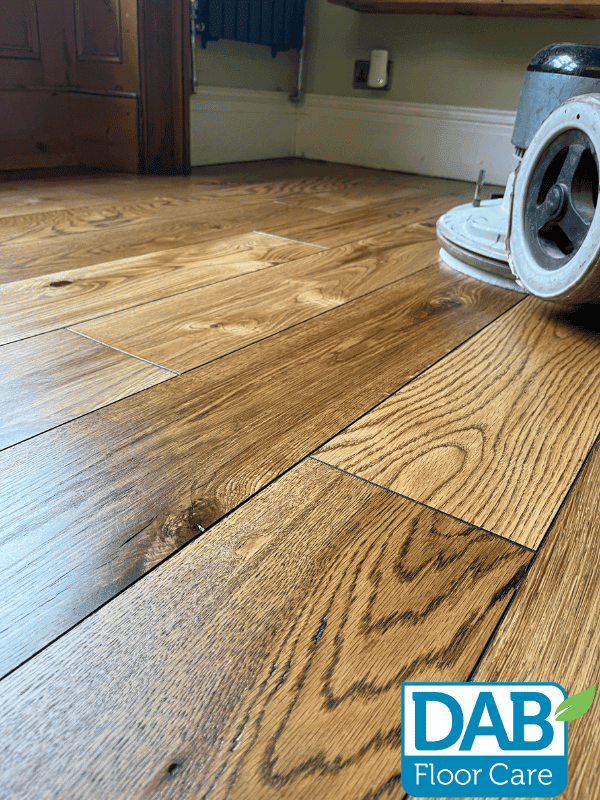
We recently restored an engineered oak floor this way — assessed the wear layer, sanded back to bare timber, then stained the floor to a warm oak tone and finished with a durable lacquer. You can see that project on our wood floor staining page.
Choosing the Right Finish
For a newly sanded engineered floor, we typically recommend either a premium lacquer from the Berger Seidle range — available in matt, satin, or ultra-matt for different levels of sheen — or a 2K oil finish, which soaks into the wood for a more natural look and feel. We’ll talk through which suits your home and lifestyle during your survey. See our Lacquer vs Oil Guide for a full comparison.
If your floor already has a finish and just needs refreshing rather than a full sand, we match whatever’s currently down — lacquer, oil, or hardwax oil — as part of our recoating and re-oiling service.
When Sanding Isn’t the Right Solution
Not every engineered floor should be sanded. We may recommend an alternative where the wear layer is too thin, boards have suffered water damage or delamination, previous sanding has already removed too much timber, or isolated boards simply need replacing.
In these situations, a professional recoat, selective repairs, or board replacement can often extend the floor’s life without unnecessary risk.
Looking After Your Restored Engineered Floor
Felt pads under furniture, regular sweeping or vacuuming, wood-floor-specific cleaning products, and avoiding excessive water all help a restored floor stay looking good for years.
A maintenance recoat before heavy wear sets in can also delay the need for another full sand.
Areas Covered
We regularly restore engineered wood flooring across Huddersfield, Halifax (including Hebden Bridge and the wider Calderdale area), Bradford, Manchester, Rochdale, Burnley, Leeds, and the surrounding areas of West Yorkshire, Greater Manchester and East Lancashire.
 Chat with us