
Wood Floor Recoating & Re-Oiling
If your floor has lost its shine but isn’t damaged underneath, you may not need a full sand at all. Wood floor recoating and re-oiling refresh the protective finish already on your floor, restoring its appearance without removing any wood.
We match the treatment to the finish that’s already on your floor, whether that’s lacquer, oil or hardwax oil, so you get the right maintenance solution rather than unnecessary restoration.
We regularly carry out wood floor recoating and re-oiling across West Yorkshire, Greater Manchester and East Lancashire, helping homeowners maintain their timber floors before more extensive restoration becomes necessary.
What Is Wood Floor Recoating?
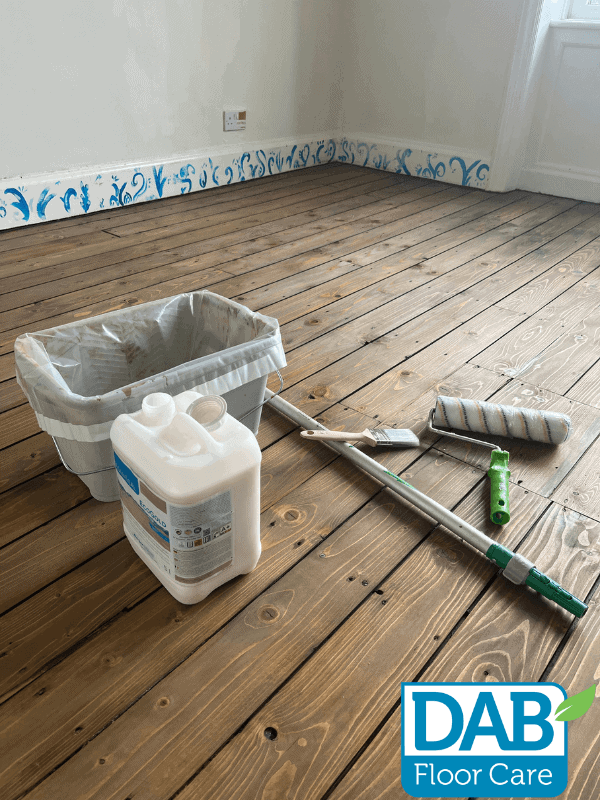
Wood floor recoating — sometimes called a screen and recoat — is a maintenance treatment for lacquered floors that have become dull or lightly scuffed but still have their protective finish intact, with no bare timber showing through.
Rather than sanding the floor back to bare wood, we lightly abrade the existing lacquer to create a key for the new coat, thoroughly remove all dust, and apply a fresh layer of finish. This rebuilds the protective surface and restores the sheen without the time, cost or disruption of a full sand and refinish.
Recoating is often recommended every 3-5 years, depending on foot traffic. Keeping on top of this maintenance can delay the need for a full restoration by several years while also preserving the floor’s thickness for future sanding if it’s ever required.
What Is a Screen and Recoat?
The terms wood floor recoating and screen and recoat are often used interchangeably, although “screen and recoat” is more commonly used within the flooring industry.
The name comes from the fine abrasive screen used to lightly prepare the existing lacquer before a new protective coat is applied. Unlike full sanding, this process doesn’t remove the timber itself — it creates the ideal surface for the fresh finish to bond securely while preserving the existing coating underneath.
Because only the protective finish is renewed, a screen and recoat is only suitable where the existing lacquer remains intact and there’s no exposed bare wood.
Re-Oiling an Oiled Floor
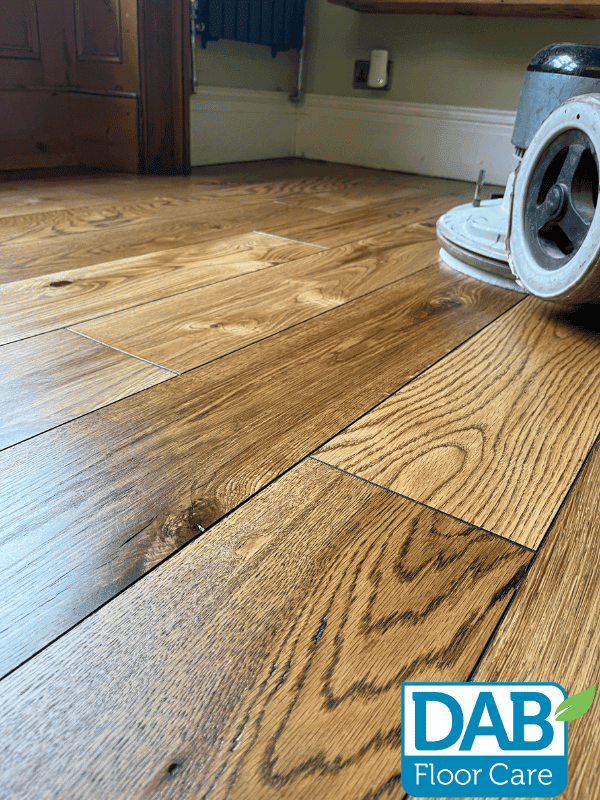
Floors finished with oil need a different maintenance approach. Unlike lacquer, which forms a protective film on the surface, oil penetrates into the wood itself. Instead of screening and recoating, we thoroughly clean the floor, lightly buff where appropriate, and apply a fresh coat of compatible oil to replenish both appearance and protection.
Re-oiling is typically quicker and less disruptive than a full sand and refinish, though it generally needs carrying out more frequently than a lacquer recoat, particularly in busy areas such as hallways, kitchens and open-plan living spaces.
Recoating Engineered Wood Flooring
Recoating can be an excellent maintenance option for engineered wood flooring. Because only the existing finish is refreshed, there’s no unnecessary removal of the floor’s valuable wear layer, helping preserve the timber for any future sanding that may eventually be required.
As with solid wood flooring, the existing finish must still be in good condition for recoating to succeed — we’ll confirm this during assessment.
Our Wood Floor Recoating Process
- Inspection — confirming whether recoating or re-oiling is suitable
- Identifying the existing finish — lacquer, oil, or hardwax oil
- Thorough cleaning — removing dirt and contaminants from the surface
- Light abrading or buffing — preparing the existing finish where appropriate
- Dust removal, then applying the new protective finish
- Drying and curing advice — realistic timeframes before furniture and rugs go back
Most recoating projects are completed within a day, though the finish still needs adequate curing time before it reaches full durability — we’ll explain exactly what to expect for the products used on your floor.

Matching Your Existing Finish
Whether we’re carrying out a lacquer recoat or re-oiling an existing floor, we always match the treatment to the finish that’s already there. If you’re unsure what’s currently on your floor, we’ll identify it during a free assessment — this matters, because applying the wrong product over an existing finish can lead to poor adhesion, inconsistent appearance, or premature failure.
It’s also worth noting that not every lacquered floor can be successfully recoated. Older finishes, unknown products, silicone-based cleaning products, or previous maintenance treatments can sometimes prevent reliable adhesion — we’ll confirm this as part of assessment before recommending it.
For new finishes following a full sand, we typically recommend either a premium lacquer from the Berger Seidle range or a 2K oil, depending on the appearance and maintenance routine you prefer. See our Lacquer vs Oil Guide for the full comparison.
The Benefits of Recoating Before the Finish Wears Through
Regular maintenance is usually the most cost-effective way to keep a timber floor looking its best. Recoating or re-oiling before the protective finish wears through can restore shine, extend the life of the existing finish, delay the need for a full sand and refinish, preserve valuable wear layer for future restoration, and reduce overall maintenance costs over the floor’s lifetime.
Once the finish has worn away completely and bare timber is exposed, maintenance treatments are no longer enough — at that stage, sanding and refinishing become the better long-term solution.
Every full sand takes a little more timber off, and no floor can take that indefinitely. How many sandings does your floor have left? If you’re close to the limit, a screen and recoat keeps the surface protected without spending any of what remains.
Recoating vs Full Sanding
| Wood Floor Recoating | Full Sand & Refinish |
| Refreshes the existing finish | Removes the old finish completely |
| No timber removed | Floor sanded back to bare wood |
| Ideal for light wear and dullness | Suitable for damaged or heavily worn floors |
| Usually completed within a day | Usually takes longer depending on the project |
| Lower overall cost | Greater restoration, more involved |
| Extends the life of the existing finish | Creates a completely new finish |
If you’re unsure which option is right for your floor, we’ll assess its condition and recommend the least invasive solution that gives the best long-term result. For a fuller breakdown of when to choose each option, see our existing guide: Recoating vs Refinishing: How to Maintain Lacquered Wood Floors.
What Results Can You Expect?
Recoating and re-oiling can make a noticeable difference to tired timber floors, restoring clarity, richness and sheen while renewing the protective finish.
It’s worth having realistic expectations, though: because the timber itself isn’t sanded, deeper scratches, dents, black staining, or other damage already in the wood will remain visible.
Maintenance treatments improve the finish, not the timber’s underlying condition — if your floor has suffered more significant wear, we’ll explain whether sanding and refinishing would give a better, longer-lasting outcome.
When Recoating or Re-Oiling Isn’t Enough
Recoating and re-oiling only work when the underlying floor is still in good condition. If your floor has deep scratches, black staining, exposed bare wood, water damage, or areas where the finish has completely worn away, a full sand and refinish will usually produce a far better, longer-lasting result.
Domestic & Commercial Wood Floor Maintenance
We provide wood floor recoating and re-oiling for both domestic and commercial properties.
Whether it’s a family home, office, retail premises, or hospitality venue, regular maintenance helps protect timber flooring from unnecessary wear while reducing the need for more extensive restoration later on.
Areas Covered
We carry out wood floor recoating and re-oiling across Huddersfield, Halifax (including Hebden Bridge and the wider Calderdale area), Bradford, Manchester, Rochdale, Burnley, and the surrounding areas of West Yorkshire, Greater Manchester and East Lancashire.
 Chat with us