
Parquet Floor Restoration in West Yorkshire & Greater Manchester
Parquet can be stained to change or deepen its colour, from rich dark tones to warm honey shades, using Berger Seidle ExpressStain Colour mixed on site to match what you want where needed.
Every job is finished with a hard-wearing lacquer topcoat or a 2K oil finish, applied only after a full sand to bare, prepared wood.
Parquet Floor Restoration in West Yorkshire & Greater Manchester.
Parquet is one of the most characterful floors a home or building can have, and it’s often in better condition than it looks. At DAB Floor Care we repair and restore parquet floors across West Yorkshire, East Lancashire and Greater Manchester: re-fixing loose blocks, filling gaps, wood floor sanding with professional dust-controlled equipment and finishing in lacquer or oil.
Not sure if your floor can be saved? Send us a few photos on WhatsApp and we’ll tell you what we think.
Message us on WhatsApp
Is your parquet floor worth restoring?
Usually, yes. Age alone isn’t a reason to replace parquet. A floor is normally a good candidate when:
- most of the blocks are still in place
- the floor feels solid underfoot
- the main problems are scratches, worn finish, staining or ingrained dirt
- gaps between blocks are small to moderate
- any water damage is in one area, and any damp problem has been dealt with
If blocks are loose, missing or lifting, that doesn’t rule restoration out. It just means repairs come first. If your floor was carpeted for years, it’s often well preserved underneath. For a very old floor, see our guide: can a century-old parquet floor be saved?
Parquet floors we restore
We work on traditional block parquet, herringbone, finger and more modern parquet designs, in oak, walnut, maple and other hardwoods.

What parquet restoration involves
Every floor is different, but most jobs follow the same order:
- Assessment. We check the condition of the blocks, the subfloor, any damp and how many times the floor has already been sanded.
- Repairs. Loose blocks are re-fixed, failed adhesive is cleared and missing or damaged blocks are replaced, using reclaimed timber where we can find a close match.
- Controlled sanding. Parquet blocks run in different directions, so the grain changes across the floor. We use professional floor sanding machinery together with high-performance dust extraction, carefully refining the surface to minimise sanding marks while keeping airborne dust and disruption to a minimum.
- Edges and detail. Edges, corners and areas by skirting boards are sanded with controlled machines so the finish is even all the way to the walls.
- Gap filling. Where appropriate, smaller stable gaps can be filled using a professional resin-based wood floor filler combined with fine sanding dust. Larger gaps, loose blocks or areas with movement may need a different repair rather than simply filling them.
- Fine preparation. The surface is smoothed and cleaned ready for its finish.
- Finishing. We apply the finish you’ve chosen, and where practical can put samples on your actual floor first so you can judge colour and sheen in your own light.
Filling gaps between parquet blocks
Small and moderate gaps that are stable can usually be filled, which improves the look of the floor and stops dirt collecting. Very wide or moving gaps are different: filler can crack if the joints keep moving, so those areas may need timber slivers, replacement blocks or a section re-laid. We’ll tell you which approach suits your floor before work starts.
Can engineered parquet flooring be restored?
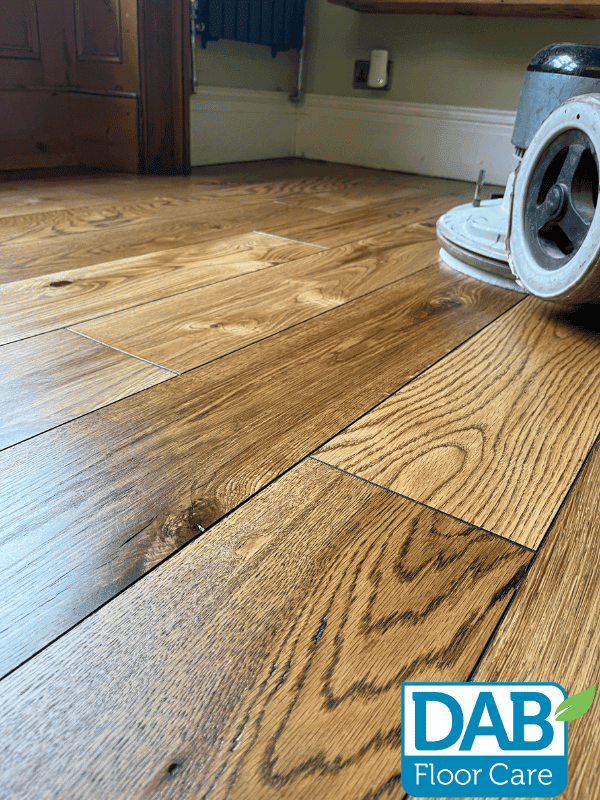
Often, yes, but it needs checking first. Engineered parquet has a layer of real hardwood on top of a plywood or composite base, and that top layer (the wear layer) is only so thick. Every sanding removes a little of it, and some engineered floors have already been sanded or have a thin veneer. We assess the remaining wear layer before we start. If there’s enough, we can sand and refinish it. If there isn’t, a lighter restoration or a different approach may be safer, and we’ll tell you honestly.
Finishes for restored parquet
- Lacquer, including our 2K lacquer systems, for customers who want a highly durable, lower-maintenance finish.
- Professional oil systems, including 2K oil, for a more natural look that shows off the grain.
- Staining, if you want to change or deepen the colour before the protective finish goes on, with samples where practical.
Not sure whether oil or lacquer is right for your floor? Read our guide to oil vs lacquer finishes.
Dust control
Sanding doesn’t have to cover the house in dust. We use professional extraction equipment that captures dust at the machine, so there’s far less mess to clear up and much less disruption to your home. We regularly vacuum down the areas we are working in to ensure that there is a little dust and mess as possible.
How long does it take?
Most domestic parquet restoration projects take around two to three days, although floors that need extensive repairs can take longer. Drying and curing times depend on the finishing system used. Once we’ve agreed the finish, we’ll explain when the floor can be walked on, when furniture can safely go back and when rugs should be replaced.
How much does parquet floor restoration cost?
We don’t publish a price list, because no two parquet floors are the same. The price depends on:
- the size of the floor and how easy it is to work in
- how many blocks need re-fixing or replacing
- the amount of gap filling
- the existing finish and how much needs to come off
- the finish you choose
- any heritage or listed-building considerations
The quickest way to get an initial idea of cost is to send us a few photos, approximate dimensions and your location by WhatsApp. We can usually give you an indication of the likely cost from this information. If that is within budget, we can then arrange an inspection where required before providing a detailed quotation that sets out the preparation, repairs, sanding, finishing and anything we can’t promise before work begins.
Parquet Floor Restoration: Before and After
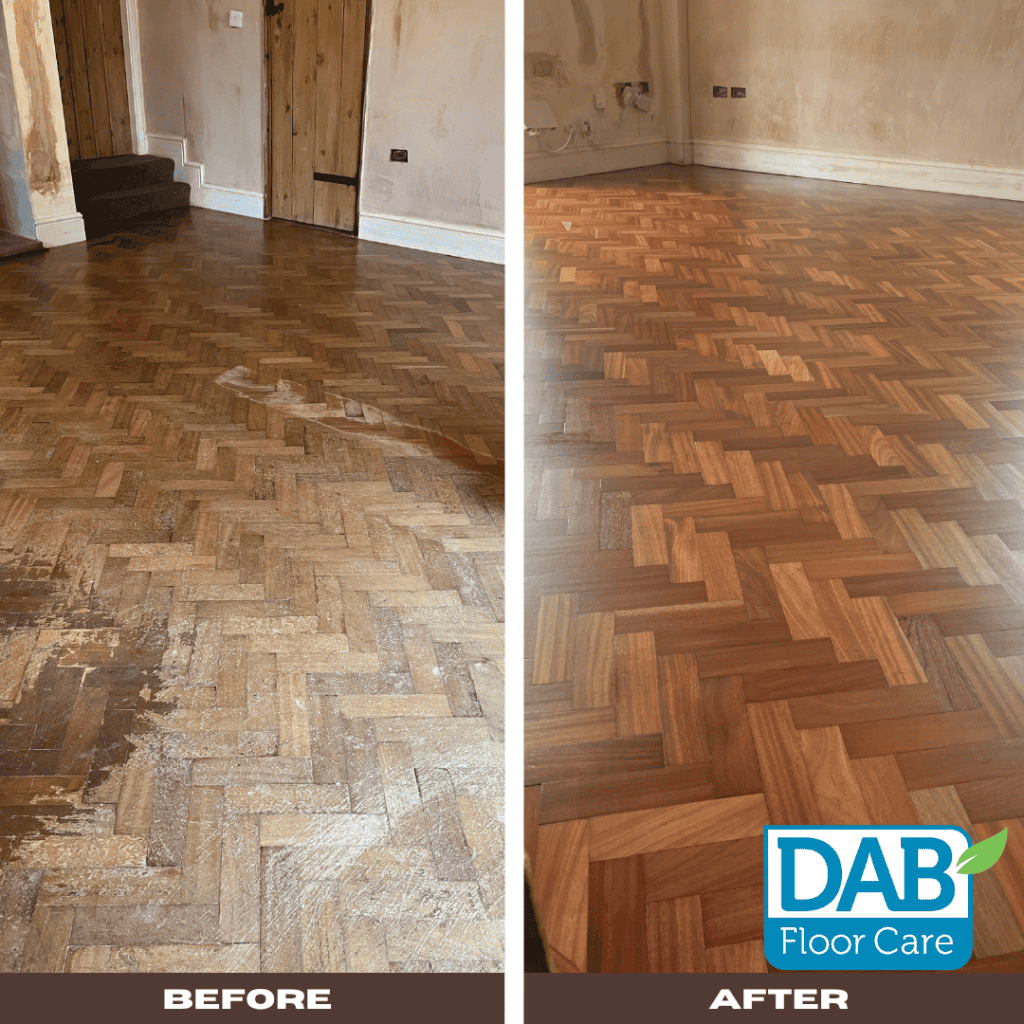
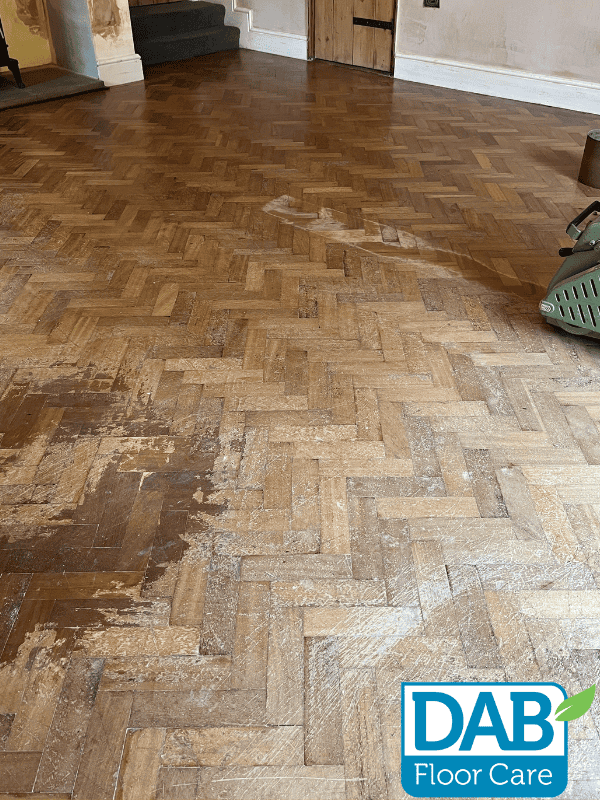
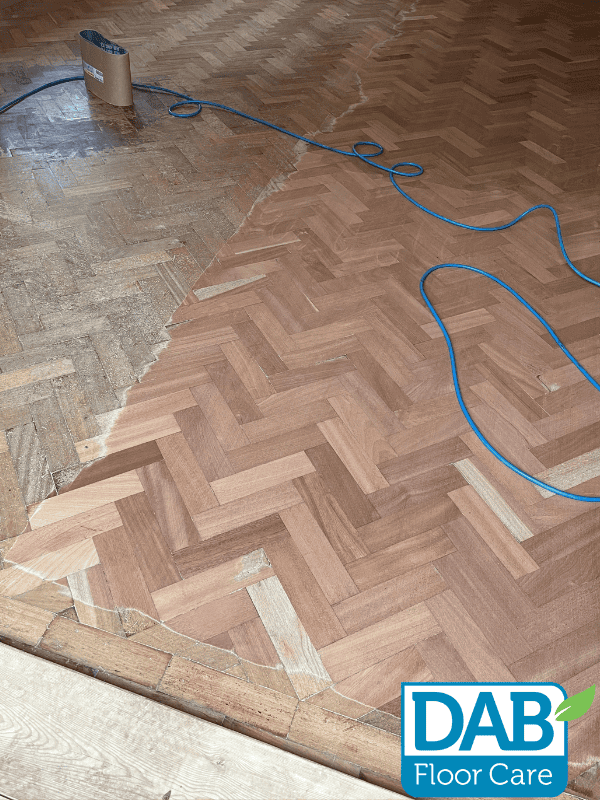
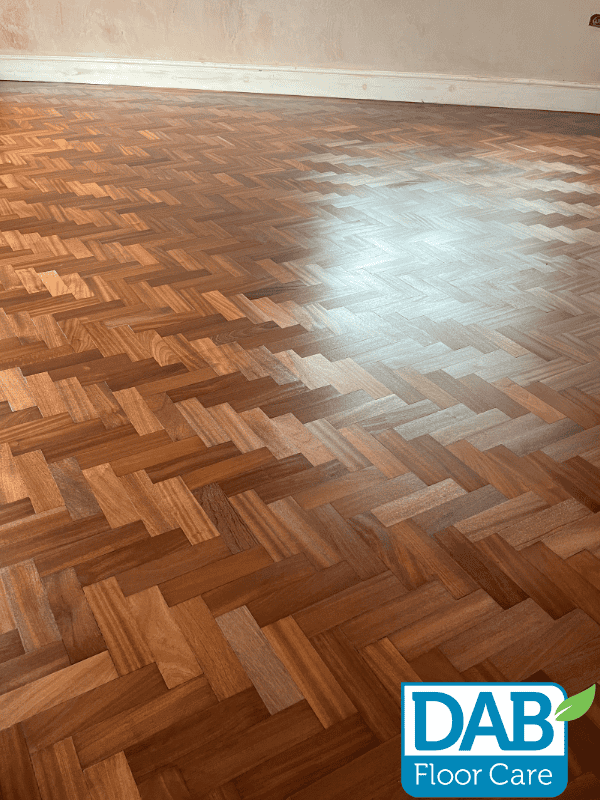
Old parquet can look beyond saving, but the condition of the existing finish doesn’t always reflect the condition of the timber underneath. This floor had years of wear, scratches and a heavily deteriorated surface, yet the original parquet blocks still had plenty of potential.
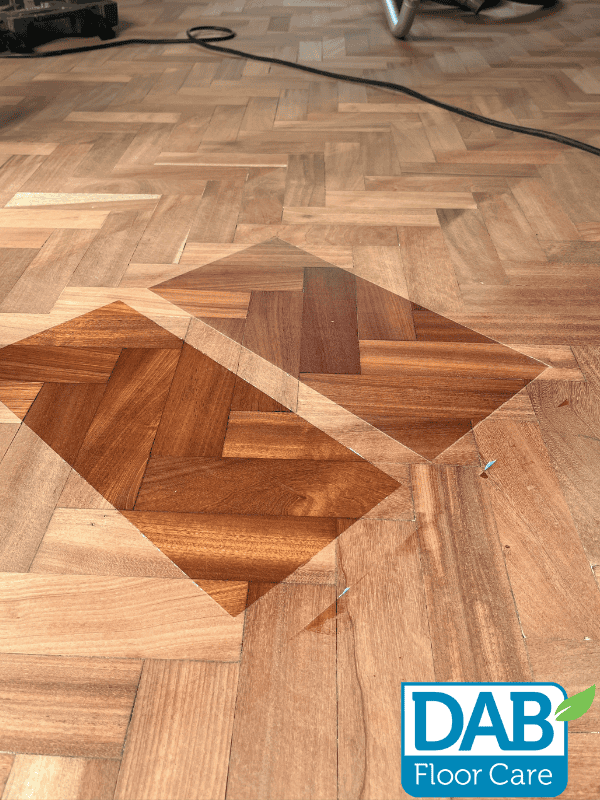
We carefully sanded the floor back to clean timber, removing the damaged old finish and progressively refining the surface to bring out the detail and variation within the individual blocks. After preparation, the parquet was professionally refinished to protect the timber and enhance its natural colour and character.
The before-and-after difference shows why parquet floor restoration can be such a worthwhile alternative to replacement. Where the original blocks are sound, even a tired and heavily worn floor can often be transformed while retaining the character of the original flooring.
Areas Covered
Based in Todmorden, DAB Floor Care provides parquet floor restoration throughout West Yorkshire, Greater Manchester and East Lancashire. We regularly work in Halifax, Huddersfield, Rochdale, Manchester, Burnley and surrounding areas, and travel to Leeds, Bradford and further afield for suitable restoration projects.
Parquet restoration questions
Can parquet flooring be restored?
Very often, yes. If most of the blocks are sound and any damp has been resolved, parquet usually responds well to repair, careful sanding, gap filling and a new finish.
Is it worth restoring parquet flooring?
In many cases it is. Restoration keeps an original feature and its pattern, removes years of wear and avoids the disruption of replacing the floor. Where large areas are rotten or missing, replacement of those sections may be needed, and we’ll say so honestly.
Can parquet be sanded?
Yes, but it needs more care than a plank floor because the grain changes direction from block to block. It also depends on how much timber is left, since every sanding removes a little. We check this before we start.
Can engineered parquet be sanded?
Often, if the wear layer is thick enough. We check the remaining thickness first, because sanding removes timber and some engineered floors have already been sanded.
Can you replace missing parquet blocks?
Yes. We replace missing or damaged blocks, using reclaimed timber where we can find a close match, and blend them in during sanding and finishing.
Will it be dusty?
Much less than people expect. We use professional machines with high-performance dust extraction, which keeps airborne dust to a minimum.
Can you restore parquet in a listed building?
We work on period floors, and for listed properties it’s worth checking with your local authority or conservation officer before work begins. Historic England’s guidance on listed building consent is a good starting point. Our page on listed building floor restoration has more.
How much will it cost?
See the cost section above. Send us photos, rough dimensions and your location on WhatsApp and we’ll talk it through.
Can I restore parquet myself?
Light cleaning and re-oiling are within reach. Full sanding is a different matter. Hired machines can leave dips and scratches that are expensive to correct, and parquet is less forgiving than plank floors. If the floor is valuable, ask for advice first.
Ready to find out what your parquet floor needs?
Send us photos on WhatsApp or give us a call and we’ll tell you what we think. You can also see what our clients say about us!



 Chat with us