
By Dave Byrne
How to Fix Squeaky and Creaky Floorboards (and When to Call a Professional)

A squeak underfoot can be irritating, but it does not automatically mean your floor is failing. Often, the sound comes from a small amount of movement: a board rubbing against a joist, a loose fixing shifting as you walk, or neighbouring boards catching against each other.
If you’re wondering how to fix squeaky floorboards, start by finding out where the movement is coming from. A small, localised noise in a firm floor may be suitable for a simple fix. Widespread movement, cracked boards or a springy area needs a more careful assessment before you start drilling or lifting boards.
Table of Contents
Why do floorboards creak or squeak?
Timber floors move naturally as conditions in the home change. The wood can expand or contract with changes in temperature and humidity, and small shifts may become more noticeable during colder months when indoor heating dries the air.
Common causes of creaking floorboards include:
- Boards rubbing on joists or battens as someone walks over them
- Loose nails or screws allowing a board to lift slightly and drop back
- Gaps between boards where seasonal movement has changed how they meet
- Movement in the subfloor or joists, rather than the visible board alone
- Worn, cracked or poorly fitted boards that no longer sit securely
- Underfloor issues, such as inadequate support or a gap beneath a board
The sound can help you narrow down the cause, but it cannot confirm it on its own. If the floor also feels soft, dips noticeably or moves across a large area, treat that as more than a simple squeak.
Start with safe checks
Before trying a repair, pinpoint the noise and check whether the floor feels firm.
- Walk slowly across the room. Listen for the precise spot where the sound starts, rather than assuming the whole floor is affected.
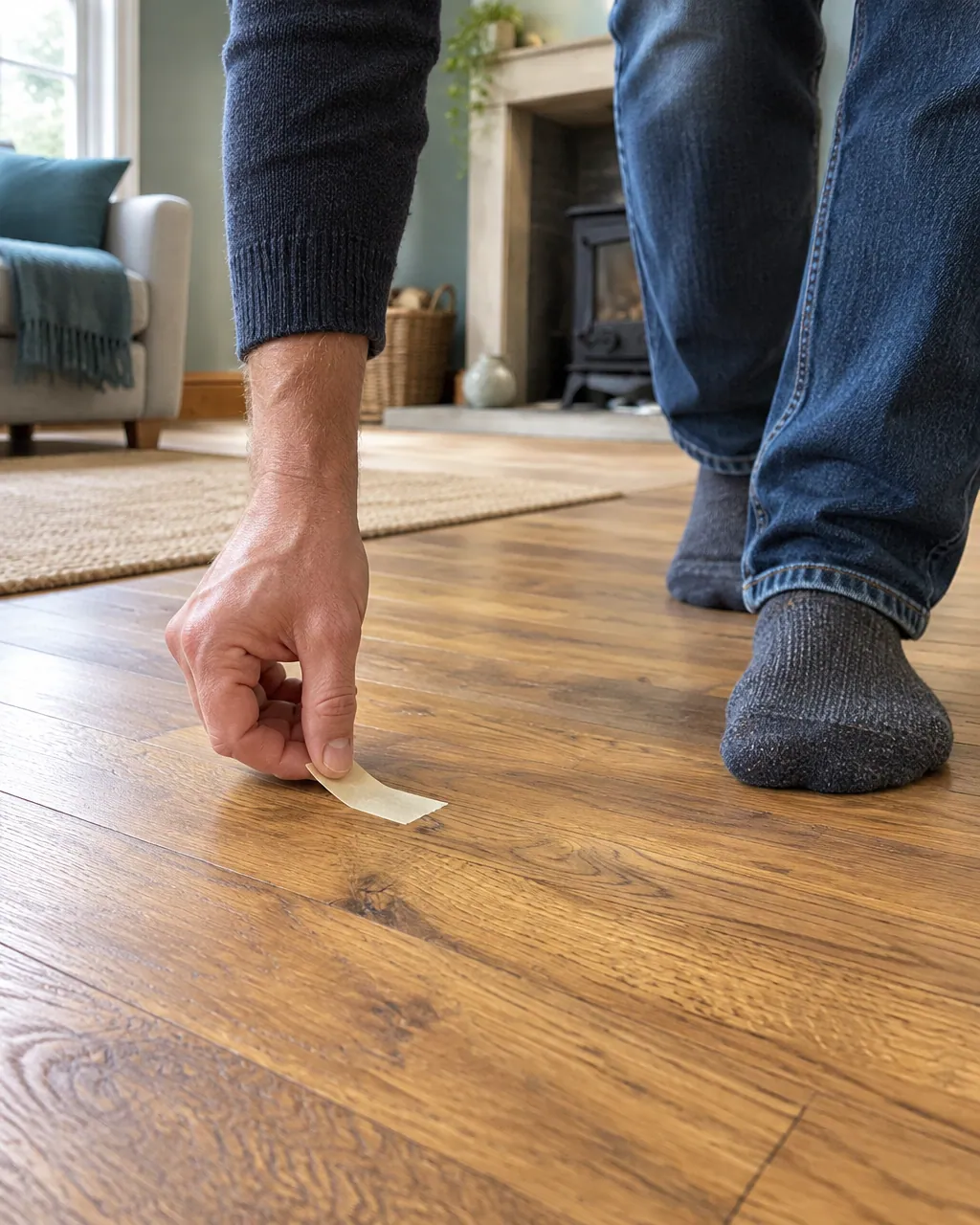
- Mark noisy areas with masking tape. This makes it easier to keep track of them as you inspect the floor.
- Notice how the board moves. Does it creak when you put weight on it, when you lift your foot, or both? Does the board visibly move?
- Look for warning signs. Check for cracks, damp patches, loose sections, a change in floor level or damage to the ceiling below.
- Consider what may be beneath the floor. Pipes and electrical cables can run close under floorboards. Don’t drill, screw or lift a board unless you can do so safely and know where the services are.
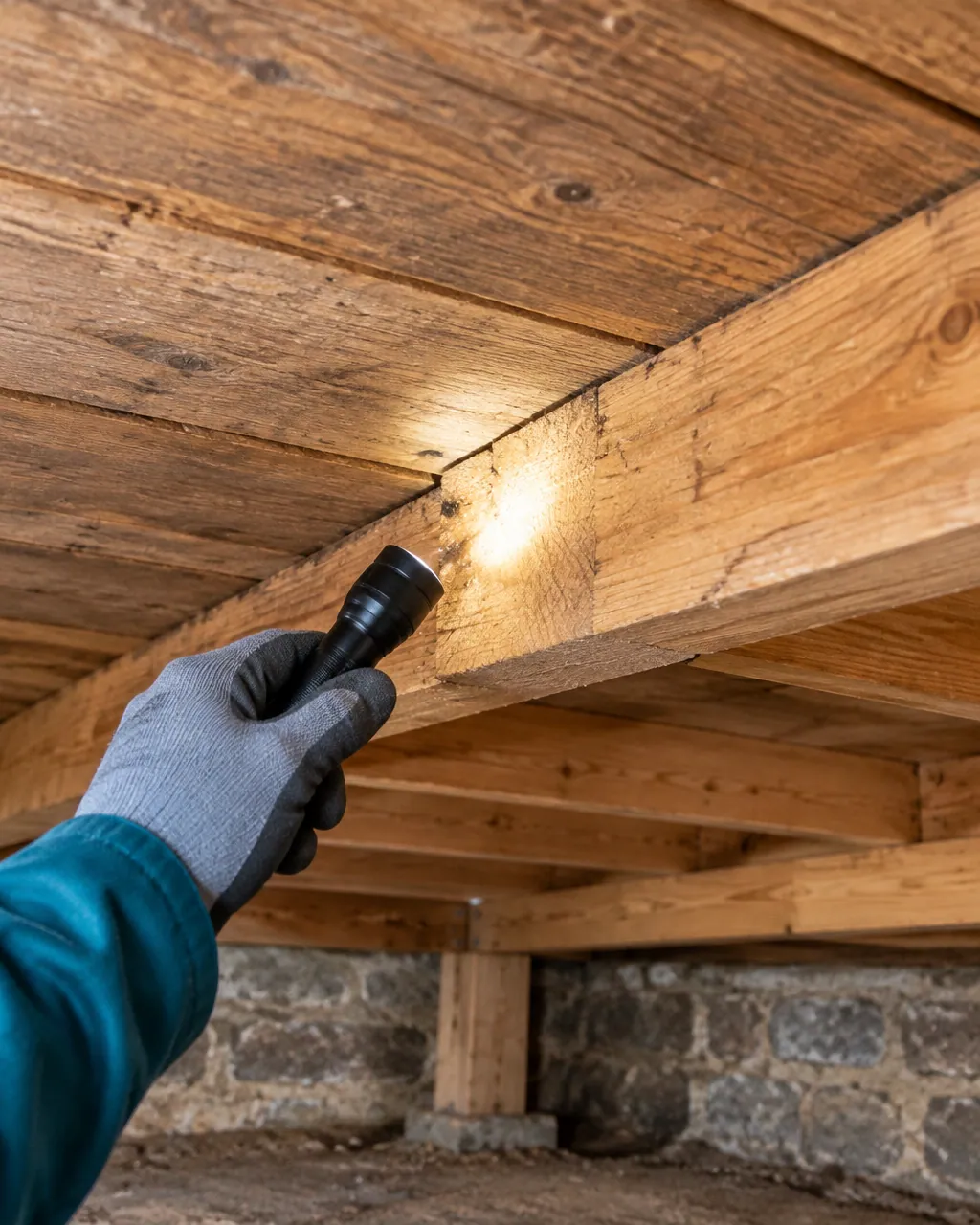
If you have safe access underneath the floor, checking from below while someone walks across the room may help show whether a board is lifting away from a joist or whether the supporting structure is moving. Don’t enter an unsafe or confined space to investigate.
How to fix squeaky floorboards: simple fixes
Reduce friction between neighbouring boards
If the floor feels firm and the noise seems to come from two boards rubbing at their edges, a small amount of talc or powdered graphite worked into the joint may reduce the friction. Use it sparingly and wipe away any excess. This is a simple, limited measure: it won’t secure a loose board or correct movement beneath the floor.
Avoid pouring liquid lubricants onto a wood floor. They can stain the finish or leave a slippery residue.
Fixing a loose board from above
Where a board moves over a sound joist, securing it with a screw is often more reliable than adding nails. Only do this if it is safe:
- Find the joist. Boards are fixed along the joists, so look for the line of existing nail heads, or use a stud and joist detector.
- Rule out pipes and cables. Use a detector that picks up metal pipes and live cables, and don’t drill if you are unsure what is underneath.
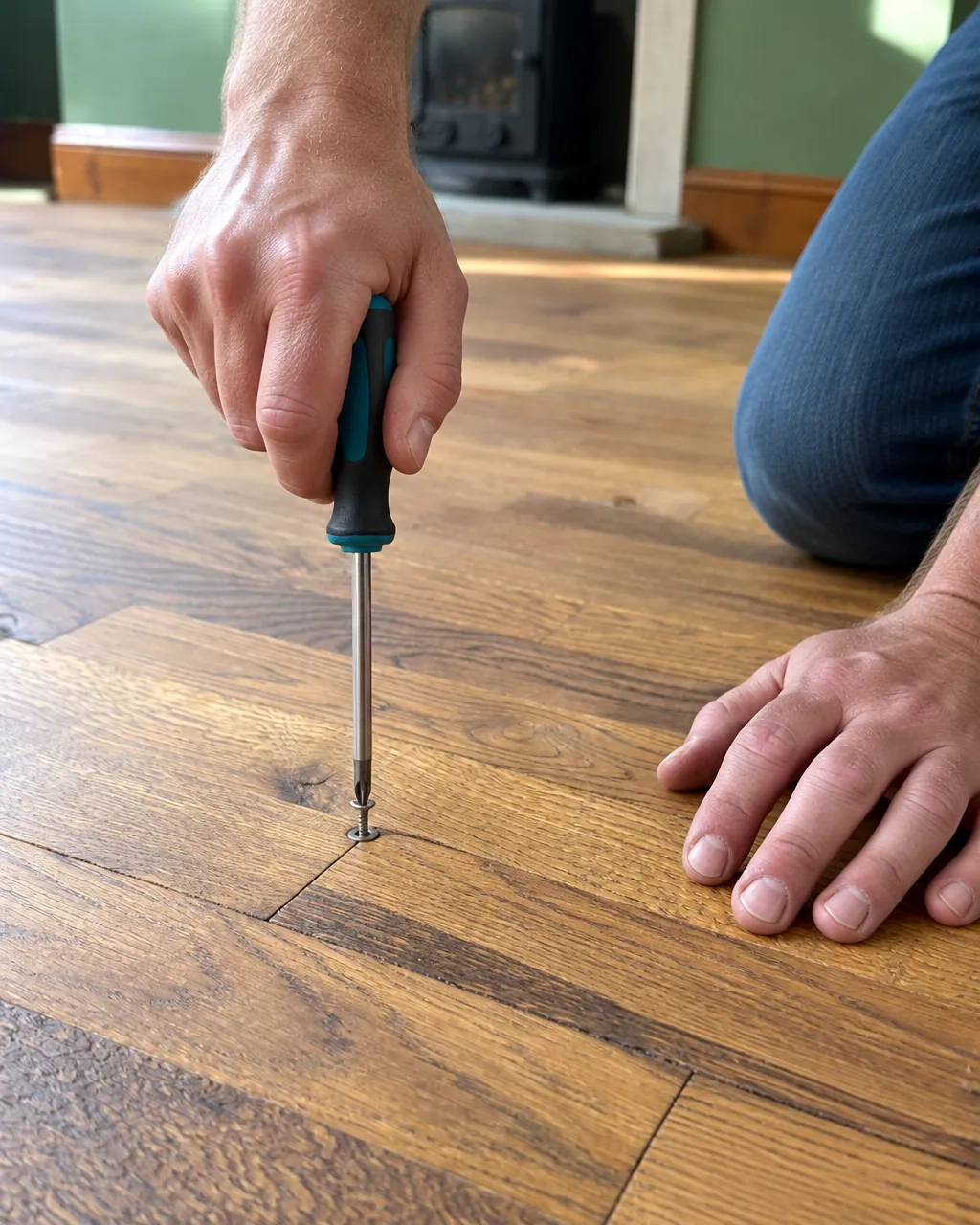
- Drill a pilot hole. Use a bit slightly narrower than the screw, and go slowly so you don’t split an old or brittle board.
- Drive in a screw. Choose a screw length that holds in the joist without reaching whatever is beneath it, and sink the head just below the surface.
- Fill the head. A suitable filler or wood plug keeps the repair neat. On a finished floor the patch may still show.
If you’re unsure about the joist position, the depth below the board or what services may be present, don’t guess. A misplaced fixing can cause damage or create a safety risk. Simply hammering in more nails may also be a short-lived answer if the original cause of the movement remains.
Fixing a loose board from below
If you have safe access under the floor, the repair can be tidier because nothing shows on the surface. A fixing or support is added from underneath so the board is held against the joist. It is only suitable where you can reach the board safely and the floor above is not too thick for the fixing used. If you can’t see clearly or the space is cramped, leave it to a professional.
Dealing with gaps between boards
Seasonal gaps can let boards flex and rub. Small gaps often settle with the seasons and don’t always need filling. If you are filling them, use a flexible product suited to timber movement, because rigid filler can crack and drop out as boards move. This is also easier to do properly as part of a sanding and restoration job than as a one-off patch.
Don’t wedge or force a board into place
A gap under a board may be part of the problem, but forcing in a thick wedge can lift the board and create a ridge elsewhere. Likewise, adding fixings without understanding the floor construction may not address movement in the joists or subfloor. If the board remains loose after a straightforward check, pause and get advice.
When is professional floorboard repair the better option?
A professional assessment is sensible if:
- Boards are cracked, badly worn or coming loose
- The noise affects a large area or is getting worse
- The floor feels springy, soft, unstable or noticeably uneven
- You suspect movement in the joists or subfloor
- You find signs of damp, rot or a leak
- You can’t safely locate pipes, cables or the supporting joists
In these situations, the priority is understanding what is moving and why. A flooring specialist can assess the boards and advise whether local repairs or further investigation are needed. If there is significant sagging, suspected structural damage or a leak, the right next step may be a relevant building professional or plumber before the floor is repaired.
How DAB Floor Care can help
Floorboard repairs and gap filling can form part of a wider sanding and restoration project, but sanding is not a fix for an unstable floor. Loose or damaged boards should be assessed and, where appropriate, repaired before the floor is sanded and refinished.
When the timber itself is worn or the finish has deteriorated, DAB Floor Care provides wood floor sanding and restoration using Lagler PST® (Premium Sanding Technology), which captures sanding dust as we work. If the surface is lightly worn but the existing finish is intact, wood floor recoating may be more suitable than a full sand. Our wood floor sanding and restoration service includes an assessment of the floor’s condition and advice on the appropriate next step.
DAB Floor Care is Todmorden-based, and Dave Byrne visits every job personally. We offer free site surveys, with clear advice before work is agreed. For customers with busy households, out-of-hours and school-holiday scheduling can be discussed where appropriate.
For local information, see our wood floor sanding and restoration pages for Huddersfield and Halifax. After any sanding or refinishing, follow the advice in our floor aftercare guide to help protect the finish.
Frequently asked questions
Why do my floorboards squeak more in winter?
Changes in indoor humidity can make timber shrink or move slightly, which makes joints and fixings noisier. If the floor remains firm, level and otherwise in good condition, seasonal noise may simply reflect that movement. A new, widespread or worsening change deserves a closer look.
Do squeaky floorboards always need replacing?
No. A local squeak may come from a loose fixing or friction between boards, and the board itself may be in good condition. Replacement or more extensive repair may be considered if boards are cracked, badly worn or no longer secure.
Can I fix creaking floorboards without taking up the carpet?
Sometimes, but the fixing still has to go into a joist, and you can’t locate joists or rule out pipes and cables reliably through a carpet. If you can’t find the joists safely, or the board is under a fitted carpet and underlay, it is usually better to get advice than to guess.
Can sanding stop floorboards squeaking?
Not by itself. Sanding restores the surface; it does not resolve loose fixings, a moving subfloor or a problem with the joists. Any necessary repairs should be assessed first. If sanding and restoration are appropriate, DAB uses Lagler PST® (Premium Sanding Technology).
Arrange a free site survey
If your boards are cracked, loose across a wide area or moving underfoot, avoid guessing at a repair. Dave can visit personally, assess the floor and explain the available options.
Message Dave on WhatsApp, call 07799 620089, or request an enquiry online:

 Chat with us