
Restoring Victorian Pine Floorboards: A Guide for Period Homes
Pull up an old carpet in a Victorian terrace across Halifax, Huddersfield, or Bradford and there’s a good chance you’ll find original pine floorboards underneath — often worn, often with visible gaps, but very much worth restoring rather than covering back up or replacing. This guide covers what to expect from the process and the decisions worth making before you start.
Why pine, and why it looks the way it does
Most Victorian terraces in this part of Yorkshire used softwood — pine, typically — for their floorboards, laid in narrow runs and face-nailed with cut nails that leave a distinctive square head. It was affordable, widely available, and never intended to be a visible showpiece. Boards in many rooms were originally intended as a structural floor, often covered with rugs and, later, fitted carpets as fashions changed over the following century. Bare original pine floors have become desirable more recently, and pine is now one of the features people specifically want to keep when renovating a period property.
Common problems with original Victorian boards
- Gaps between boards — timber shrinks over a century, and gaps between boards are one of the most common complaints, both for appearance and for the draughts they let through.
- Old nail holes and repairs — a century of lifted boards for plumbing and wiring usually leaves visible patch repairs and old fixing holes.
- Unevenness — joists settle over time, and boards can dip or rise slightly across a room.
- Old finishes — dark Victorian-era stains, old varnish, or decades of accumulated wax and paint splashes are common under carpet.
None of these rule out restoration — they’re just things worth knowing about before deciding what “restored” should actually look like for your specific floor.
When restoration may not be the right option
Although most Victorian pine floors can be restored successfully, there are situations where the repair work becomes more extensive. Severe rot, widespread woodworm damage, or significant movement caused by structural issues may mean individual boards, or even whole sections of flooring, need replacing before sanding can begin. A professional assessment helps identify these issues early, so repairs can be carried out while retaining as much of the original floor as possible rather than discovering the problem partway through a job.
The restoration process
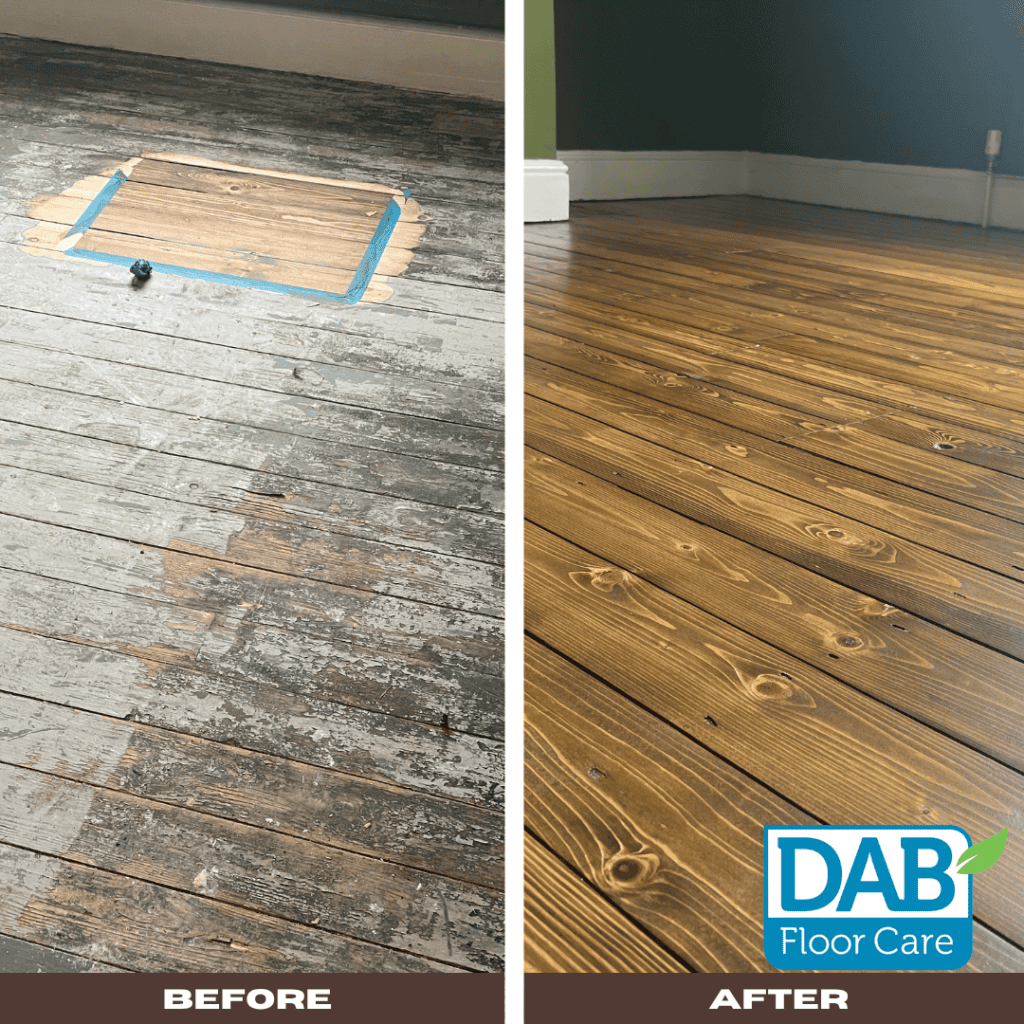
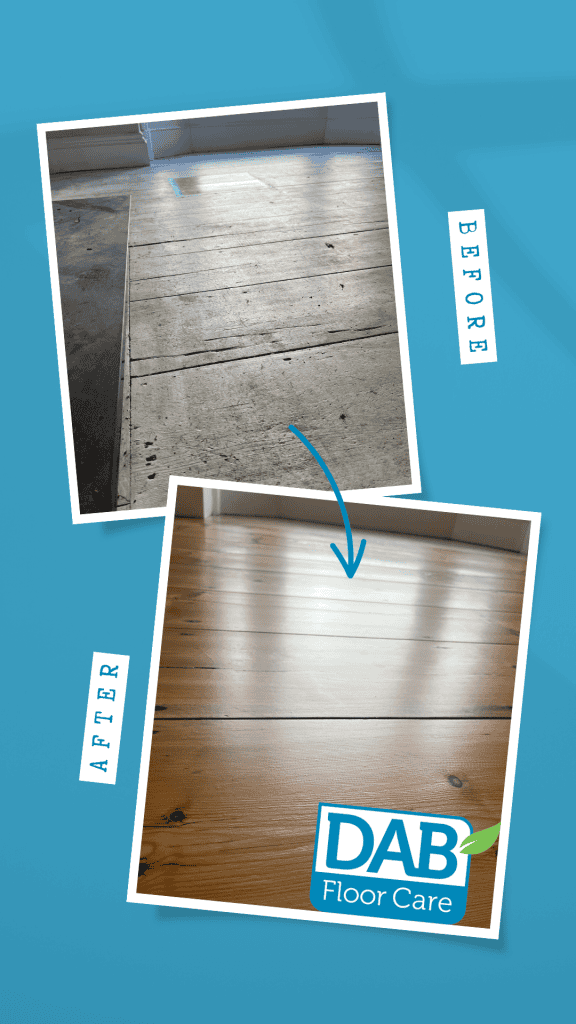
Sanding starts with clearing old fixings and checking for any raised nail heads, since cut nails sitting proud of the surface can damage sanding equipment and need addressing first. From there, the floor is sanded back to bare timber — see our wood floor sanding page for how that process works more generally. Where gaps between boards are a genuine issue — for draughts or appearance — gap filling can be carried out as part of the same job, using a method that moves with the timber rather than a rigid filler that cracks out over time.
For finish, there are a few routes depending on the look you want. If you’d like to introduce a specific tone rather than the board’s natural colour, Berger Seidle ExpressStain Colour gives an even, controlled result, applied to bare, freshly sanded wood as standard. For a new finish from bare wood — stained or natural — we use a premium lacquer from the Berger Seidle range or 2K oil, both of which give a durable, stable result. Hardwax oil comes into play specifically where a floor already carries an existing hardwax oil finish and the job is a refresh rather than a full strip-back.
What affects the cost of restoring Victorian floorboards?
No two Victorian floors are identical, so cost depends on a mix of factors: the amount of old adhesive or paint to remove, whether repairs are needed, the size of the room, whether gap filling is required, and the finish chosen. Floors that have been covered by carpet for decades often sand beautifully with relatively little preparation, while heavily painted or previously repaired floors can need more work before refinishing begins.
Restoring sympathetically
The aim with a genuinely old floor isn’t to make it look brand new — it’s to bring back its condition while keeping the character that makes it worth restoring in the first place: slight variation in board width, old repairs, the marks of a century of use, becoming a feature in their own right rather than something to hide under carpet. The SPAB Historic Floors Guidance Note is a useful independent resource if you want a deeper read on the principles behind sympathetic repair of older timber floors, particularly if your property has any additional heritage protection.
Victorian pine floorboard restoration across West Yorkshire
Many homes throughout Halifax, Huddersfield, Bradford, and the surrounding towns were built during the Victorian period and still retain their original softwood floors beneath carpets or laminate. We’ve restored original pine boards in terraces, stone cottages and larger period homes across the region, helping homeowners uncover character that’s often been hidden for decades.
Getting your floor assessed
Every Victorian floor has a slightly different starting point — board condition, gap severity, and what’s underneath the existing finish all vary. Sending a few clear photos via WhatsApp is often enough for us to give an initial opinion before arranging a survey.
Frequently Asked Questions
Are Victorian floorboards always pine?
Pine and other softwoods were the most common choice in standard Victorian terraces, though grander properties sometimes used oak, and parquet occasionally appears in reception rooms.
Can gaps between floorboards be filled without losing character?
Yes — gap filling addresses draughts and appearance while keeping the original boards in place, and it can be carried out as part of the sanding process rather than as a separate disruptive job.
Do Victorian floorboards need a specific finish?
There’s no single correct finish — it depends on whether you want to introduce colour or keep the timber’s natural tone, and on how the room is used day to day. We’ll talk through the options once we’ve seen the floor.
What if my Victorian floorboards are badly damaged?
Widespread rot, woodworm, or structural movement may mean some boards need replacing before sanding rather than just refinishing — a professional assessment identifies this early so as much of the original floor as possible can be kept.
 Chat with us