
Wood Floor Restoration: What It Really Involves (and When It’s Better Than Replacement)
By Dave Byrne
When a wooden floor looks tired, scratched or faded, replacement may seem like the simplest answer. In many cases, however, the existing floor can be carefully restored and given a new lease of life.
Wood floor restoration is about more than sanding away an old surface. A proper restoration considers the floor as a whole : its condition, construction, movement, repairs, gaps, colour and protective finish. The aim is not simply to make the timber look cleaner, but to improve its appearance, stability and useful life.
At DAB Floor Care, we restore oak, pine, parquet, engineered wood and solid wood floors for domestic and commercial customers across West Yorkshire, East Lancashire and Greater Manchester.
Table of Contents
What does wood floor restoration involve?
Every floor is different, so the process should begin with an assessment rather than a fixed programme of work. The condition of the boards or blocks, the existing finish, previous repairs and the type of subfloor can all affect the recommended approach.
A typical restoration may include:
- Inspecting the timber and identifying areas of damage
- Checking for loose boards, blocks or movement
- Carrying out localised repairs where appropriate
- Filling suitable gaps between boards or parquet blocks
- Sanding away old coatings, scratches and surface wear
- Testing colour options if a stain is required
- Applying a new lacquer or 2K oil finish
- Allowing appropriate drying and curing time before normal use
Some floors may need only preparation and refinishing, while others require more detailed repair work before sanding begins. This assessment-led approach helps ensure that the finished floor is suitable for the property and your expectations.
These terms often overlap in everyday use, but they can describe different levels or stages of work:
| Term | What it usually means | When it may be suitable |
|---|---|---|
| Floor sanding | Removing old finishes and damaged surface timber | When the floor needs preparing or surface wear needs removing |
| Floor refinishing | Sanding or preparing the floor and applying a new protective finish | When the timber is sound but looks worn, dull or scratched |
| Wood floor restoration | A wider service that may include repairs, gap filling, sanding and refinishing | When the floor has age-related damage, movement, gaps or more complex wear |
Step one: assessing the floor before work starts
A professional floor restoration should always start by understanding what is underneath the worn surface.
Solid timber floors may have been sanded previously, and engineered flooring has a real wood wear layer of limited thickness. This means engineered wood should be assessed carefully before any sanding is recommended. The condition and remaining thickness of the top layer will help determine whether restoration is suitable.
Other points to consider include:
- Deep scratches, dents or stains
- Water damage or darkened areas
- Loose or squeaking boards
- Parquet blocks that have lifted or lost adhesion
- Gaps between floorboards
- Uneven areas or movement underfoot
- Old paint, varnish or other coatings
- The condition of the surrounding skirting and thresholds
Not every mark can be removed completely. Deep damage may require a local repair or board replacement, while some structural problems may need attention before cosmetic work can begin. A proper assessment gives you a clearer understanding of what can realistically be achieved.
Repairs come before sanding
Sanding can transform the surface of a wooden floor, but it cannot correct every underlying problem. Loose boards, unstable parquet blocks and damaged sections should be dealt with before the main restoration work takes place.
Depending on the floor, repairs may include securing loose boards, re-attaching parquet blocks or replacing isolated sections of damaged timber. Where replacement is necessary, the new material may still need to weather and blend with the existing floor over time. The surrounding area will generally need careful sanding and refinishing so that the repair does not appear as a sharply contrasting patch.
This is particularly important with traditional parquet flooring. The pattern, block orientation and condition of the subfloor all need to be considered to protect the character of the original floor.
Why gap filling can be an important part of restoration
Gaps are common in older floorboards and parquet floors. They may have developed as the timber responded to changes in humidity and temperature, or because boards and blocks have moved gradually over time.
Gap filling can improve the visual continuity of the floor and, in suitable circumstances, help reduce draughts and the passage of dust through larger spaces. The correct method depends on the size and stability of the gaps.
For smaller, stable gaps, a specialist flexible filler can be made using fine sanding dust from the floor. This helps the filled areas blend with the surrounding timber. The boards or blocks must be secure first, as movement can affect the durability of the filler.
Larger or more troublesome gaps may need a different repair approach, such as carefully fitted timber slivers. Gap filling is not suitable for every floor or every gap, so it should be assessed as part of the wider restoration rather than treated as an automatic step.
Sanding reveals the condition of the timber
Sanding is an important stage of wood floor restoration, but it is only one part of the process. Professional sanding removes old coatings and surface damage, levels minor irregularities and prepares the timber for its new finish.
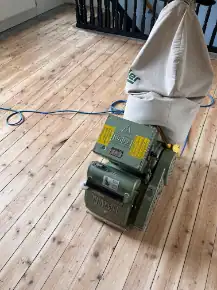
DAB Floor Care uses Lagler PST® technology, which captures dust at source for a virtually dust-free sanding process. This helps keep the working area cleaner and reduces the spread of dust through the property.
The sanding process is carried out progressively, using appropriate grades to remove the old surface before refining the timber. Edges, corners and areas around fixed fittings also require careful attention. On parquet floors, the direction and pressure of sanding must be controlled to avoid damaging the block pattern.
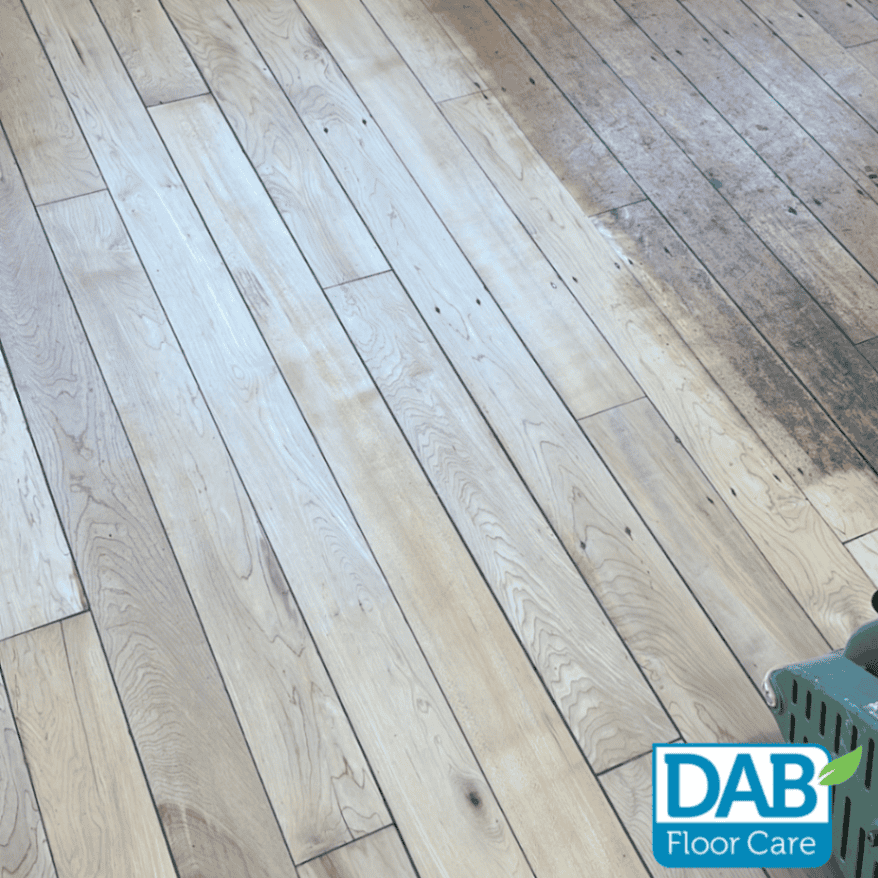
The result should be a clean, evenly prepared surface : not simply timber that appears lighter because an old coating has been removed.
Choosing the right colour and finish
Once the floor has been prepared, you can decide whether to retain the natural appearance of the timber or change its colour.
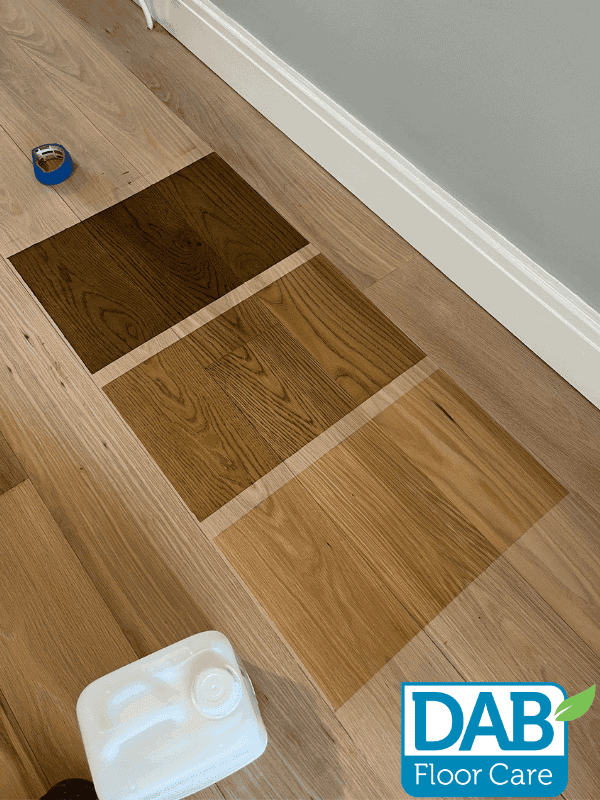
Staining can alter the tone of oak, pine or other wood flooring, but the final result depends on the species, grain, age and previous treatment of the timber. For this reason, testing colour directly on the floor can be more useful than relying only on a sample card.
DAB Floor Care can provide sample finishes to help you compare options in the actual room and under its natural lighting.
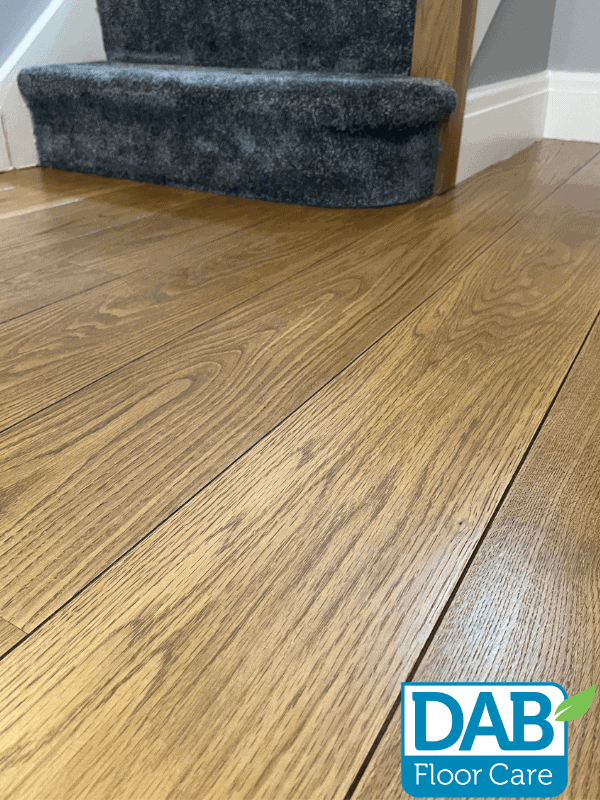
For a newly restored wood floor, the finish options should be lacquer or 2K oil. Lacquer creates a protective surface and is available in different appearance levels, including matt, satin and gloss. A 2K oil can provide a natural-looking finish while offering durable protection when correctly applied and maintained.
If a floor already has a compatible hardwax oil finish and only needs a suitable refresh or recoat, that can be considered separately. Hardwax oil should not be treated as a standard new finish after a full sand or strip-back.
When is restoration better than replacement?
Restoration may be the right choice when the existing floor is fundamentally sound and the main problems are related to wear, appearance or manageable local damage.
Restoration is often worth considering when:
- The timber is solid, engineered or parquet and remains suitable for treatment
- Scratches, stains and old coatings are mainly surface-level
- The floor has period character that you want to preserve
- Repairs can be carried out without replacing large areas
- You prefer to improve the existing floor rather than remove it
- The current layout and material still suit the room
Restoring an existing floor can also avoid the disruption associated with lifting and disposing of the old flooring, ordering new materials and installing a completely new surface. It can preserve original boards or parquet blocks that contribute to the character of an older property.
The decision should still be based on condition rather than appearance alone. A worn finish does not necessarily mean the floor has failed, but visible damage may sometimes indicate a deeper problem.
When might replacement be the better option?
Replacement may be more appropriate where the floor has widespread structural damage or is no longer suitable for sanding and refinishing.
This may include:
- Extensive rot or severe water damage
- Large areas of unstable or missing timber
- A failed subfloor causing significant movement
- An engineered floor with insufficient wear layer remaining
- Deep damage that extends beyond what sanding can safely remove
- A need to change the layout, material or specification completely
In these situations, restoration may not provide the durable result you need. A professional assessment can help separate repairable surface wear from problems that require more extensive work.
It is also possible for a project to involve both approaches : for example, repairing or replacing a limited number of boards before restoring the rest of the floor.
The practical benefits of professional restoration
Benefits:
- Revives tired, scratched and worn timber
- Preserves original oak, pine or parquet flooring
- Includes assessment and repair advice
- Can improve the appearance of gaps and old surface damage
- Provides a choice of lacquer or 2K oil finishes
- Uses virtually dust-free Lagler PST® sanding technology
- Helps reduce disruption and keeps the working area tidy
- Gives you a clear plan before work begins
The finished result depends on the floor’s original condition, the repairs required and the finish selected. Professional restoration cannot turn severely compromised timber into new flooring, but careful preparation can make a considerable difference to a sound floor.
Wood floor restoration across West Yorkshire and beyond
DAB Floor Care provides specialist wood floor sanding and restoration for homes, landlords, property managers and businesses. We work with solid wood, engineered wood, oak, pine and parquet flooring, including traditional floors that need a particularly careful approach.
Every job is handled directly by Dave, with clear advice and a free, no-obligation quotation. We can discuss the condition of your floor, explain which stages may be required and help you understand whether restoration or replacement is likely to be the more sensible route.
You can contact DAB Floor Care to arrange an assessment or send details of your floor for initial advice. We serve customers across West Yorkshire, East Lancashire, Greater Manchester and surrounding areas, including Huddersfield, Halifax, Leeds, Rochdale, Manchester and beyond.
A tired wooden floor may not need to be removed. With the right assessment, repairs, preparation and finish, it may simply need the careful specialist attention required to bring it back to life.
If you’d like an initial opinion on your floor, the quickest way to start is a few photos. Send them to Dave directly on WhatsApp and you’ll get honest, practical feedback on whether restoration is realistic for your floor — free, no-obligation, and no pressure either way.
 Chat with us